You Won’t Believe What This City Hides in Plain Sight
Christchurch, New Zealand, isn’t just a gateway to the South Island—it’s a slow traveler’s dream. I spent two weeks here, wandering without a plan, and discovered terrain so unique it felt otherworldly. From ancient volcanic fields to braided rivers carving through the plains, the landscape tells a story of fire, ice, and time. If you’re chasing authenticity over checklists, this city delivers in ways no guidebook warns you about. The rhythm of life here doesn’t shout; it whispers through riverbeds, echoes in basalt formations, and lingers in quiet neighborhoods where gardens grow from memory and rubble. Christchurch invites not just sightseeing, but deep listening—to the earth, to its people, and to the subtle pulse of renewal that defines this place.
Reimagining Christchurch: Beyond the Rebuild
When most people think of Christchurch, the image that comes to mind is one of recovery—buildings rising from the scars of the 2010 and 2011 earthquakes. But to see the city only as a post-disaster story is to miss its deeper transformation. What has emerged is not just a rebuilt urban center, but a reimagined relationship between people and place. The city’s heart, once dominated by concrete and commerce, now pulses with green spaces, open-air galleries, and community-led projects that honor both loss and resilience.
Take the Re:START Mall, one of the first responses to the central city’s devastation. Constructed from brightly colored shipping containers, it was initially seen as a temporary fix. Yet it became a symbol of adaptability—a place where small businesses thrived amid uncertainty. Though some permanent structures have since returned, the spirit of improvisation remains. Street art covers once-bland walls, each mural telling a story of healing, identity, or quiet defiance. In the midst of all this, nature has quietly reclaimed its own. Former demolition sites are now pocket parks, filled with native flax, manuka, and the song of tui birds returning after years of absence.
For the slow traveler, this layered history offers more than visual interest—it invites reflection. Walking through the city, you begin to notice how new buildings incorporate earthquake-resistant designs not as an afterthought, but as a point of pride. Glass facades reflect not just the sky, but also the surrounding greenery, blurring the line between urban and wild. The Cardboard Cathedral, made from sustainable materials and designed for both worship and gathering, stands as a testament to creative resilience. It doesn’t replace what was lost; it redefines what can be built when a community chooses hope over haste.
What makes Christchurch truly special is how it balances renewal with reverence. The city doesn’t erase its past; it folds it into the present. Cracks in old pavements are sometimes left visible, framed by new concrete like geological strata. In neighborhoods like Sydenham and Woolston, local artisans have turned vacant lots into craft hubs, while community gardens flourish on land once slated for development. These spaces aren’t curated for tourists—they’re lived in, tended, and cherished. To wander here slowly is to witness not just recovery, but rebirth grounded in patience and care.
The Rhythms of Slow Exploration
In a world where travel often means ticking off landmarks, Christchurch teaches a different lesson: that presence matters more than pace. Rushing through this city would be like skimming the first page of a novel and declaring you’ve read the story. Its essence reveals itself only to those willing to linger—to sit in a sunlit café in New Brighton, sip a flat white, and watch the light shift across the Avon River as the day unfolds.
I learned this during my second week, when I stopped using maps altogether. Instead, I followed the flow of locals—walking dogs in Hagley Park, joining morning walkers along the Ōtākaro, or pausing at small bookshops tucked into converted bungalows. One afternoon, I returned to the same bench three times: once in the golden morning light, again in the stillness of midday, and finally at dusk, when the river turned silver and the city hummed with a softer energy. Each visit revealed something new—the way the wind rustled the willows, how children’s laughter echoed differently depending on the hour, or how shadows stretched like ink across the grass.
Slow travel here isn’t passive; it’s a form of attention. It means noticing the woman who waters her front garden every evening, the old man feeding sparrows near the Botanic Gardens, or the way the scent of eucalyptus drifts through the air after rain. These small moments accumulate into a deeper understanding of place. They remind you that Christchurch isn’t just a destination—it’s a living rhythm, shaped by seasons, memory, and the quiet determination of its people.
And in that slowness, connection happens. Over coffee in a neighborhood bakery, I struck up a conversation with a woman who had lived through the quakes. She spoke not of fear, but of how the disasters brought neighbors together—how people who once barely nodded now share meals, tools, and stories. Her words stayed with me, not because they were dramatic, but because they were true. Christchurch rewards those who listen. It doesn’t perform; it reveals itself gradually, like a landscape emerging from mist.
Braided Rivers: Nature’s Shifting Masterpiece
One of the most striking features of the Canterbury Plains is its braided rivers—complex networks of shallow channels that split, merge, and shift course across wide gravel beds. The Waimakariri and Avon Rivers are prime examples, their ever-changing paths shaped by glacial runoff, seasonal floods, and the dynamic movement of stone and sediment. From above, they resemble intricate lacework; on the ground, they feel like walking through a living puzzle, where the rules of direction and stability no longer apply.
These rivers are not just scenic—they are ecologically vital. Their shifting channels create unique habitats for native birds like the wrybill, the only bird in the world with a beak that curves sideways, allowing it to feed under stones. The braided river ecosystem is fragile, and conservation efforts are ongoing to protect it from invasive weeds, introduced predators, and human disturbance. For travelers, this means access must be respectful. Sticking to designated paths, avoiding nesting seasons, and keeping dogs leashed are simple but essential practices.
One of the best ways to experience these rivers is at sunrise, when the light gilds the gravel and the water runs clear and cold. The Waimakariri offers several quiet access points near Sheffield and Klondyke, where you can walk along the edge without disturbing the core habitat. The Avon, which flows through the city, is more accessible and perfect for a reflective stroll. Near Estuary Park, the river widens and slows, merging with tidal flats where herons stand motionless, waiting for fish.
Photographers will find endless inspiration here—the contrast of blue water against pale stone, the way fog curls over the channels in winter, or the sudden flash of a banded dotterel darting across the bed. But even without a camera, the experience is profound. Standing on a gravel bar, surrounded by multiple streams converging and diverging, you feel the impermanence of the land—and your own small place within it. These rivers do not stay the same. They erode, rebuild, and transform, just like the city beside them.
Volcanic Footprints and Ancient Landforms
Beneath Christchurch’s calm surface lies a fiery history. The region sits on the edge of the Pacific and Australian tectonic plates, a boundary that has shaped the landscape for millions of years. While the city itself is built on alluvial plains, just a short journey away lies the Banks Peninsula—a dramatic arc of land formed by massive volcanic eruptions between 11 and 6 million years ago. These ancient volcanoes, now eroded and softened by time, offer some of the most accessible geological wonders in New Zealand.
Walking through Akaroa or hiking the ridgelines of the peninsula, you can see the remnants of lava flows, solidified into rugged cliffs and fertile slopes. Basalt columns, formed as molten rock cooled slowly, stand like sentinels along coastal paths. In some areas, you can explore lava tubes—caves created when the outer layer of a lava flow hardened while the molten core drained away. These natural tunnels, though not always open to the public for safety reasons, are a reminder of the earth’s hidden forces.
The volcanic soil has also shaped the region’s ecology. It’s rich, well-drained, and perfect for farming and viticulture. Local orchards produce award-winning apples, while boutique vineyards thrive on the sun-facing slopes. But beyond agriculture, the terrain invites contemplation. Hiking to the summit of Mount Herbert, the highest point on the peninsula, offers panoramic views of harbors, forests, and the Pacific beyond. On clear days, you can see all the way to the Southern Alps.
What makes these landscapes powerful is their sense of deep time. They don’t speak of centuries, but of epochs. To walk here is to feel the weight of geological change—not as a threat, but as a constant. The same forces that built these hills are still at work, subtly shifting the ground beneath our feet. In a world that often feels fast and fleeting, the volcanic landforms around Christchurch offer a rare connection to something enduring, ancient, and quietly magnificent.
Microclimates and Unexpected Landscapes
One of the most surprising aspects of Christchurch is how much the environment can change within just a few kilometers. Due to variations in elevation, wind patterns, and exposure, the region hosts a mosaic of microclimates. Cross a ridge, descend into a valley, or approach the coast, and you might find yourself in a completely different world—one where the air is damper, the soil sandier, or the temperature noticeably cooler.
Take the Heathcote Valley, nestled between the Port Hills and the city. On a summer afternoon, it can be warm and still, the air thick with the scent of wild thyme. But climb just 200 meters to the top of the hills, and a sharp coastal wind greets you, carrying salt and the cry of gulls. The vegetation shifts too—from lush native bush in sheltered gullies to hardy coastal scrub on exposed ridges. This contrast isn’t just scenic; it supports a surprising diversity of plant and animal life.
Another example is the transition between the fertile plains and the drier, steeper slopes near Diamond Harbour. Here, frost settles earlier in the autumn, shortening the growing season and favoring hardy grasses and drought-resistant shrubs. In winter, mist often pools in the basins, creating an ethereal, almost dreamlike atmosphere. For travelers, this means every walk can be an ecological journey. A single route from the city to the hills might take you through urban gardens, regenerating wetlands, coastal forests, and alpine-like ridges—all in under three hours.
These microclimates also influence how locals live. Vineyards are carefully sited to catch the sun, while gardens in frost-prone areas are planted with cold-tolerant species. For visitors, the key is to dress in layers and be prepared for change. A sunny morning can turn blustery by afternoon, and a dry trail may become muddy after a brief shower. But that unpredictability is part of the charm. It keeps you present, alert to the subtle shifts that define this land.
Hidden Trails and Low-Key Access Points
While popular spots like Hagley Park and the Christchurch Gondola draw crowds, some of the most rewarding experiences lie off the beaten path. Christchurch is threaded with lesser-known trails—quiet riverbanks, regenerating forest edges, and abandoned rail corridors turned into greenways. These spaces offer solitude, beauty, and a chance to move at your own pace, away from the noise of tourism.
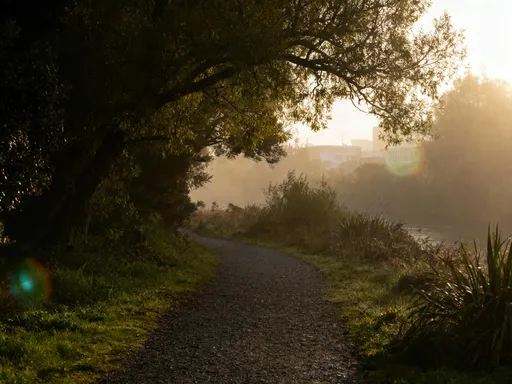
One such route is the Old Rail Trail along the Heathcote River. Once a working railway line, it’s now a smooth, flat path ideal for walking or cycling. It winds through native bush, crosses small bridges, and passes by old station platforms now overgrown with ferns. Birdlife is abundant—kingfishers dive for fish, while bellbirds call from the canopy. Because it’s not heavily promoted, it remains peaceful, even on weekends.
Another gem is the Purau Track on Banks Peninsula. Starting from a small coastal road, it climbs through regenerating forest to a ridgeline with sweeping views of Lyttelton Harbour. The trail is well-marked but rarely crowded, and the sense of discovery is palpable. Along the way, you’ll pass old stone walls from early settler farms, silent reminders of a different era.
For those seeking water access, the edges of the Avon-Heathcote Estuary offer quiet boardwalks and viewing platforms. At low tide, the mudflats teem with life—crabs, shellfish, and wading birds probing for food. Binoculars are recommended, as many species are shy. The key to enjoying these spaces is respect: staying on paths, avoiding sensitive areas during breeding seasons, and leaving no trace. These trails aren’t just for recreation; they’re part of a larger effort to restore and protect the region’s natural heritage.
Why This Terrain Changes Travelers
Christchurch does not dazzle with grand monuments or dramatic skylines. Its power lies in subtlety—in the way light filters through river mist, how a single birdcall breaks the silence of a valley, or how a patch of wildflowers grows from cracked concrete. To travel here slowly is to be reshaped by these quiet moments. The terrain doesn’t just surround you; it invites you inward, encouraging mindfulness, presence, and a deeper awareness of the natural world.
There’s something humbling about walking on land shaped by forces far older and greater than human life. The braided rivers, the volcanic hills, the shifting microclimates—all speak of constant change, resilience, and renewal. In a culture that often values speed and control, Christchurch offers a different model: one of adaptation, patience, and quiet growth. It reminds us that beauty can emerge from disruption, and that healing—whether of land or spirit—takes time.
Travelers who come here with checklists may leave satisfied. But those who come with curiosity often leave transformed. They carry with them not just photos or souvenirs, but a slower heartbeat, a sharper eye for detail, and a renewed sense of wonder. They learn to appreciate not just what a place looks like, but how it feels—the weight of history, the breath of wind, the pulse of life returning.
So if you’re planning a journey to New Zealand’s South Island, consider making Christchurch more than a stopover. Let it be your starting point—not for ticking off sights, but for tuning in. Walk without urgency. Listen to the rivers. Trace the lines of ancient lava flows. Let the land speak. Because in Christchurch, the most extraordinary things aren’t hidden in secret caves or remote peaks. They’re right in front of you, waiting to be seen by those who take the time to look.