Hidden in the Dunes: Atacama’s Forgotten Desert Architecture Will Blow Your Mind
Nestled in the heart of Chile’s Atacama Desert lies a world where architecture blends seamlessly with nature’s extremes. I never expected ancient stone circles, abandoned adobe villages, and futuristic eco-domes to coexist in one landscape. This isn’t just survival design—it’s human creativity under pressure. From indigenous pukaras to solar-powered observatories, every structure tells a story of adaptation, isolation, and innovation. The desert, often seen as barren and inhospitable, has instead become a canvas for architectural resilience. Here, form follows survival, and beauty emerges not in spite of hardship, but because of it. The Atacama, with its surreal terrain and celestial clarity, offers more than breathtaking views—it reveals how humans have learned to listen to the land and build in harmony with its rhythms.
The Atacama Desert: Earth’s Most Martian Landscape
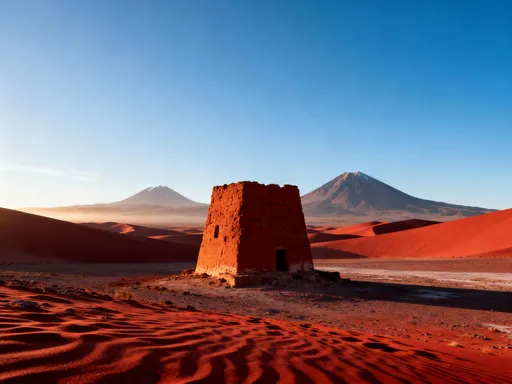
The Atacama Desert stretches across northern Chile like a vast, sculpted dreamscape, earning its reputation as the driest non-polar desert on Earth. Some weather stations here have never recorded rainfall, and certain regions have seen no significant precipitation for centuries. Located high in the Andes, much of the desert sits at elevations exceeding 4,000 meters, where oxygen is thin and the sun’s radiation is intense. Despite—or perhaps because of—these extremes, the Atacama is far from lifeless. Its salt flats shimmer like mirrors, geysers erupt in rhythmic bursts, and lagoons host flocks of pink flamingos against a backdrop of snow-capped volcanoes. This dramatic environment has long shaped how people live, move, and build.
Architecture in the Atacama has never been about aesthetics alone. Every wall, roof, and doorway is a response to environmental demands. The lack of vegetation means limited access to traditional building materials like wood, forcing inhabitants to rely on what the land provides: volcanic stone, clay, and sun-baked adobe. Temperature fluctuations are extreme—daytime heat can exceed 30°C, while nighttime temperatures often drop below freezing. As a result, buildings must retain warmth at night and deflect heat during the day. These challenges have led to remarkably intelligent designs, many of which remain effective centuries later.
What makes the Atacama especially compelling is its role as a natural laboratory. Scientists come here to study Mars-like conditions, but architects and anthropologists find equal value in its human history. The desert preserves structures with astonishing clarity due to minimal erosion from wind and water. Ancient walls stand intact, their mortar still binding stones together after hundreds of years. This preservation allows us to study architectural evolution in a way few other places permit. From pre-Columbian settlements to modern research stations, the Atacama offers a rare continuity of human adaptation across time.
The region’s geographic isolation has also contributed to its architectural uniqueness. Cut off from major trade routes for much of history, communities developed solutions using only local resources and knowledge. There was no room for error—every design decision had to serve a purpose. This necessity-driven innovation is evident in the way buildings are oriented, constructed, and integrated into the landscape. In the Atacama, architecture is not imposed on the environment; it emerges from it.
Pre-Columbian Ingenuity: The Legacy of Indigenous Architecture
Long before modern science arrived, the Atacameño people—known also as the Likan Antai—mastered the art of desert living through architecture deeply rooted in observation and tradition. Their settlements, scattered across high-altitude valleys and plateaus, were built to withstand both climate and conflict. One of the most striking examples is the pukara, a fortified village typically constructed on elevated terrain for defensive advantage. Made from stacked volcanic rock and adobe bricks, these structures feature thick walls—often more than a meter wide—that provide excellent thermal insulation. Small, narrow windows reduce heat gain during the day and prevent heat loss at night, creating stable interior temperatures without any mechanical systems.
These ancient builders understood the importance of orientation. Many dwellings face east to capture the morning sun, warming interiors after cold nights. Roofs are flat, using layers of wood, reeds, and clay to resist wind and provide additional insulation. Courtyards and shared spaces are central to community life, fostering social cohesion while offering shelter from the elements. The layout of entire villages reflects a deep understanding of airflow, sunlight, and protection from high-altitude winds. This passive design approach, now celebrated in sustainable architecture, was perfected here long before the term existed.
Equally impressive is the spiritual dimension of Atacameño architecture. Structures were often aligned with celestial events such as solstices and equinoxes, indicating advanced knowledge of astronomy. Sacred mountains—considered living beings in indigenous cosmology—guided the placement of ceremonial sites and homes alike. Places like Tulor, an ancient circular village near San Pedro de Atacama, are believed to have served both domestic and ritual purposes. The circular layout may symbolize unity with nature or reflect cosmological beliefs, but its functional benefits are equally clear: circular forms resist wind better than rectangular ones, distributing pressure evenly around the structure.
What stands out is the harmony between utility and meaning. These buildings were not merely shelters; they were expressions of identity, cosmology, and resilience. The use of local materials ensured sustainability, while the craftsmanship ensured longevity. Even today, descendants of the Atacameño continue to preserve these traditions, restoring ancestral homes and advocating for cultural heritage protection. Their legacy reminds us that architecture can be both practical and profound, grounded in science and enriched by spirit.
Colonial Echoes: Churches and Mining Outposts in the Void
The arrival of Spanish colonizers in the 16th century introduced new architectural forms to the Atacama, blending European styles with indigenous techniques. One of the most enduring symbols of this fusion is the whitewashed adobe church, a common sight in remote Andean villages. The Church of San Pedro de Atacama, dating back to the 17th century, is a prime example. Built with thick adobe walls and a thatched roof supported by algarrobo wood beams, it combines Catholic religious symbolism with native construction methods. The thick walls, essential for temperature regulation, were made using traditional techniques passed down through generations. The result is a structure that feels both foreign and familiar—a testament to cultural adaptation under extreme conditions.
These churches were not only places of worship but also centers of community life. Located in the heart of villages, they provided shelter, hosted gatherings, and served as landmarks in an otherwise featureless landscape. Their simple, unadorned facades reflect the scarcity of resources, while their enduring presence speaks to the strength of their construction. Over time, repairs and restorations have maintained their original character, preserving the unique blend of Spanish colonial design and indigenous craftsmanship. Today, they stand as living monuments to a complex history, neither fully European nor entirely native, but something distinctively Atacameño.
Another wave of architectural change came in the 19th and early 20th centuries with the saltpeter (nitrate) boom. The Atacama became a hub for mining operations, drawing workers from across Chile and neighboring countries. Company towns like Chacabuco and María Elena sprang up overnight, built to house thousands of laborers and support industrial activity. These settlements were functional above all—rows of narrow, corrugated metal homes painted in faded blues, reds, and yellows lined dusty streets. Administrative buildings, schools, hospitals, and even theaters were constructed from prefabricated materials shipped across long distances.
When the saltpeter industry collapsed in the mid-20th century, these towns were abandoned, leaving behind ghostly remnants of a bygone era. Chacabuco, now a preserved historical site, offers a haunting glimpse into the lives of miners and their families. The metal houses, though rusted and battered by wind, still stand, their interiors revealing personal artifacts—photographs, furniture, tools—that humanize the space. The architecture here reflects a different kind of adaptation: one driven by industrial efficiency rather than environmental harmony. Yet even these utilitarian structures show signs of care—windows framed with wood, doors painted with patterns, courtyards where children once played. In the silence of the desert, these buildings whisper stories of hope, hardship, and resilience.
Modern Research Havens: Science Shapes the Skyline
In recent decades, the Atacama has become a global hub for astronomical research, thanks to its unparalleled atmospheric clarity. With minimal light pollution, low humidity, and over 300 clear nights per year, the desert offers some of the best conditions on Earth for observing the cosmos. This has led to the construction of world-class observatories, including the Atacama Large Millimeter/submillimeter Array (ALMA) and the Paranal Observatory, home to the Very Large Telescope (VLT). These facilities are not just scientific instruments—they are architectural feats designed to function in one of the most demanding environments on the planet.
The design of these observatories prioritizes precision, durability, and environmental sensitivity. ALMA, located on the Chajnantor Plateau at over 5,000 meters, consists of 66 high-tech antennas that move across the desert floor on giant transporters. The control building, nestled nearby, is a low-profile structure made of steel and concrete, painted in muted tones to blend with the terrain. Its shape is aerodynamic, reducing wind resistance, while its insulation protects sensitive electronics from extreme temperature swings. Every element—from the foundation to the ventilation system—is engineered to withstand altitude, dust, and seismic activity.
Paranal, operated by the European Southern Observatory, takes a different approach. Built on a remote mountaintop, the VLT complex features four main telescopes housed in dome-like structures that rotate with the stars. The residential and administrative facilities are partially buried into the mountain to minimize visual impact and maintain thermal stability. Water is recycled, energy is carefully managed, and all waste is removed to preserve the pristine environment. The architecture here is both futuristic and restrained, emphasizing function without sacrificing elegance. Glass corridors connect buildings, offering panoramic views of the desert while allowing natural light to reduce energy use.
These observatories represent a new chapter in desert architecture—one where science and sustainability go hand in hand. Unlike earlier industrial projects, modern research stations are designed with minimal ecological footprint. They do not extract resources but instead study them, seeking knowledge rather than profit. The presence of scientists from around the world adds a cosmopolitan dimension to the region, yet the structures remain humble, deferring to the landscape rather than dominating it. In this way, the Atacama continues to teach us how to build responsibly, even when pursuing the most advanced technological goals.
Eco-Lodges: Sustainable Design Meets Desert Luxury
As tourism in the Atacama has grown, so too has the demand for accommodations that respect the environment while offering comfort. The response has been a new generation of eco-lodges that blend seamlessly into the desert. Properties like Alto Atacama and Tierra Atacama are not just places to sleep—they are immersive experiences in sustainable design. Built with local stone, adobe, and reclaimed wood, these lodges appear to grow naturally from the earth. Their low profiles and earth-toned finishes ensure they do not disrupt the visual harmony of the landscape. Inside, open courtyards, natural ventilation, and large windows connect guests with the surrounding terrain, creating a sense of continuity between indoors and outdoors.
What sets these lodges apart is their commitment to passive design principles. Thick walls provide thermal mass, absorbing heat during the day and releasing it at night. Overhanging roofs and shaded patios reduce solar gain, while strategically placed windows capture cooling breezes. Many rooms are oriented to maximize morning light and minimize afternoon exposure. These techniques, rooted in ancient wisdom, are enhanced with modern technology—solar water heaters, photovoltaic panels, and advanced insulation systems ensure energy efficiency without compromising comfort. Some lodges generate nearly all their power from renewable sources, a remarkable achievement in such a remote location.
Water conservation is another critical focus. Given the desert’s extreme aridity, every drop is precious. Eco-lodges use greywater recycling systems to irrigate native plants, and low-flow fixtures minimize consumption. Some properties harvest condensation or treat wastewater for reuse. Landscaping is done with drought-resistant species, avoiding the introduction of non-native vegetation that could disrupt local ecosystems. Guests are encouraged to participate in conservation efforts, from towel reuse programs to guided talks on desert ecology.
Yet luxury is not sacrificed. Spas use local minerals and herbs in treatments, dining rooms serve organic Andean cuisine, and guided excursions offer access to geysers, salt flats, and ancient ruins. The experience is one of mindful indulgence—where comfort coexists with responsibility. These lodges demonstrate that sustainability and high-end travel are not mutually exclusive. On the contrary, they enhance each other, offering a deeper, more meaningful connection to place. In the Atacama, luxury is redefined not by excess, but by harmony.
Art Meets Desert: Experimental and Temporary Structures
Beyond scientific and residential architecture, the Atacama has become a canvas for artistic experimentation. Artists and architects are drawn to its vast emptiness, using the desert as a stage for ephemeral installations that challenge perception and decay gracefully over time. One notable example is the Flamingo Observatory, a conceptual artwork that blends sculpture with environmental awareness. Though not a functional observatory, it invites visitors to reflect on the relationship between nature, science, and human curiosity. Positioned near a high-altitude lagoon, the structure uses reflective materials to mirror the sky and water, creating an illusion of floating above the earth.
Other projects include land art pieces made from stones arranged in geometric patterns, temporary shelters built from fabric and bamboo, and sound installations that capture the whisper of wind across dunes. These works are intentionally impermanent, designed to erode, collapse, or be reclaimed by the desert. Their transience is part of the message—reminding us that human presence is fleeting, and nature ultimately reclaims all. Unlike permanent buildings, these structures do not seek to dominate but to dialogue with the landscape, inviting contemplation rather than habitation.
Some artists collaborate with local communities, incorporating traditional materials and stories into their work. This fusion of contemporary art and indigenous knowledge creates a rich cultural exchange, bridging past and present. Temporary architecture festivals have begun to emerge, drawing creators from around the world to build, exhibit, and eventually let go. These events are not commercial; they are acts of expression, exploration, and respect. They reflect a growing movement that sees architecture not just as shelter, but as a form of storytelling.
What unites these projects is their humility. They do not aim to last forever, nor do they seek to impress through scale or permanence. Instead, they invite pause, wonder, and reflection. In a world obsessed with durability and ownership, the Atacama’s temporary structures offer a different value: presence, awareness, and connection. They remind us that beauty can be brief, and meaning does not require permanence.
Why This Architecture Matters: Lessons for the Future
The architecture of the Atacama Desert offers more than historical curiosity or aesthetic inspiration—it provides urgent lessons for a world facing climate change, resource scarcity, and environmental degradation. From ancient pukaras to modern eco-lodges, the core principle remains the same: build with the environment, not against it. These structures prove that resilience does not require high-tech solutions alone; sometimes, the most effective answers lie in centuries-old wisdom. Thick walls, strategic orientation, and passive cooling are not relics of the past—they are blueprints for the future.
As global temperatures rise and arid regions expand, the techniques perfected in the Atacama become increasingly relevant. Urban planners in hot climates are already studying adobe construction, natural ventilation, and water recycling systems used in the desert. The idea of building low, using local materials, and minimizing energy consumption is gaining traction worldwide. The Atacama shows that sustainability is not a compromise, but an enhancement—an approach that leads to healthier, more comfortable, and more beautiful spaces.
Moreover, the desert challenges the notion that remote areas are wastelands. On the contrary, they are reservoirs of innovation, where necessity drives creativity. The observatories, eco-lodges, and art installations prove that even the most extreme environments can support human activity—provided it is thoughtful, respectful, and adaptive. The Atacama teaches us to listen to the land, to observe its rhythms, and to respond with intelligence and humility.
For travelers, this architectural journey is transformative. It shifts the focus from sightseeing to understanding, from consumption to connection. Walking through an ancient village or sleeping in a solar-powered lodge is not just a vacation—it is an education in resilience and harmony. It invites us to rethink our relationship with nature and our role as stewards of the planet.
The Atacama’s forgotten architecture is not truly forgotten—it is waiting to be seen, studied, and honored. It stands as a testament to human ingenuity, cultural continuity, and ecological wisdom. In its stone walls, solar panels, and shifting sands, we find a vision of what architecture can be: not a conquest of nature, but a conversation with it. As we face an uncertain future, the desert’s quiet lessons may be exactly what we need to build a more sustainable, thoughtful, and beautiful world.