I Tried Qigong for Wellness—Here’s What Almost Broke Me
I started qigong to stay healthy, not to fix a crisis. But even with good intentions, I made mistakes that drained my energy instead of boosting it. Turns out, doing too much, forcing breath, or skipping basics can backfire. This isn’t about dramatic healing—it’s about staying well. Let me share what went wrong so you don’t repeat my missteps.
Why I Turned to Qigong—And Why It Felt Wrong at First
Like many women in their 40s balancing family, work, and personal well-being, I found myself constantly drained. Sleep was restless, stress lingered like background noise, and my body felt stiff even after long walks. I wasn’t sick—but I wasn’t truly well, either. That’s when I first heard about qigong: an ancient practice blending gentle movement, breath, and mindful awareness to support vitality and calm. It sounded like exactly what I needed—something low-impact, doable at home, and rooted in tradition.
My initial excitement quickly turned to confusion. I watched videos online, bought a beginner’s book, and started mimicking flowing arm movements and deep breathing right away. But instead of feeling lighter, I felt more tense. My shoulders ached, my mind raced during practice, and I often ended sessions more fatigued than when I began. I wondered if I was doing it wrong—or worse, if it simply wasn’t for me.
The problem wasn’t the practice; it was my approach. I had assumed qigong was just slow exercise or a kind of moving meditation that would instantly relax me. What I didn’t understand was that qigong works on a subtle level—harmonizing the body’s internal energy, or qi, through precise alignment, natural rhythm, and sustained attention. Without proper guidance, I was missing the foundation. I was trying to build a house without laying the floor first.
This gap between expectation and reality nearly made me quit. But looking back, that early frustration was a necessary part of my journey. It taught me that wellness isn’t about quick fixes or passive routines. It’s about learning to listen—really listen—to what your body needs, not what you think it should do. And sometimes, that means slowing down even when you’re already moving slowly.
The Hidden Pitfall: Doing Too Much, Too Soon
One of my biggest mistakes was treating qigong like a fitness routine. I thought that if five minutes was good, then thirty must be better. If one form helped me feel calmer, mastering five in a week would surely double the benefits. I committed to long daily sessions, pushing through discomfort and repeating movements until I felt mentally exhausted. I even timed my practices, measuring progress by duration rather than quality.
But qigong isn’t about effort—it’s about ease. Unlike strength training or cardio, where intensity often correlates with results, qigong thrives on softness, patience, and consistency. When I pushed too hard, I wasn’t building energy; I was depleting it. My body responded with soreness in my lower back and shoulders, and my mind became restless, unable to settle even outside of practice. I began dreading my sessions, which defeated the entire purpose.
What I later learned from a certified instructor was that overexertion disrupts the very energy flow qigong aims to support. The body’s qi moves best when there is no strain, when movements are smooth and unhurried. Forcing repetition or extending practice time beyond what the body can integrate creates resistance, not resilience. It’s like trying to fill a cup by pouring too quickly—the water spills before it can be absorbed.
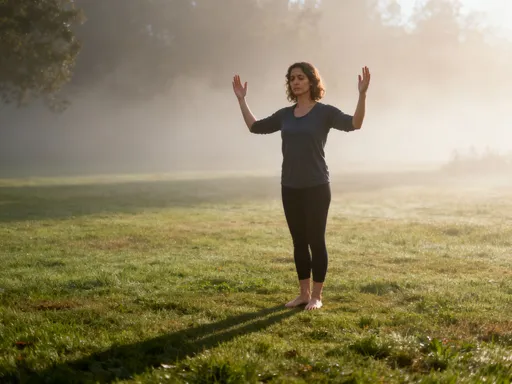
The turning point came when I scaled back to just ten minutes a day. I focused on one simple exercise: lifting the arms slowly in front of the body while breathing in, then lowering them with the exhale. That’s it. No complex sequences, no goals, no pressure. Within a few weeks, I noticed a shift—not in dramatic ways, but in small, steady improvements. My breath felt deeper, my shoulders relaxed more easily, and I stopped waking up with that familiar tightness in my neck. The lesson was clear: less can be more, especially when cultivating inner balance.
Breath Control Gone Wrong: When Calm Turns into Strain
Another area where I stumbled was breathing. I had read that deep, diaphragmatic breathing was central to qigong, so I made it my mission to “do it right.” I would inhale forcefully, expanding my belly as much as possible, and then hold the breath before exhaling slowly. I thought I was mastering a key technique, but instead, I was creating tension.
Within days, I started feeling lightheaded after practice. Sometimes, a wave of anxiety would rise mid-session, making my heart race. I didn’t connect it to my breathing at first. I assumed it was stress or caffeine. But when I mentioned it to a qigong teacher during a community workshop, she gently corrected me: “You’re not breathing—you’re controlling. In qigong, the breath should lead the movement, not be forced by the mind.”
That was a revelation. I had been treating breath like a task to perfect, rather than a natural rhythm to follow. Traditional qigong emphasizes effortless, rhythmic breathing that emerges from stillness, not effort. The goal isn’t to take the deepest breath possible, but to let the breath flow like a quiet stream—uninterrupted, smooth, and aligned with gentle motion.
I adjusted my approach. Instead of forcing my belly to expand, I placed a hand on it and simply observed. I began coordinating breath with simple arm movements: inhale as the hands rose, exhale as they lowered. I allowed the breath to stay shallow if it needed to, trusting that depth would come with time. Within a week, the dizziness stopped. More importantly, I started to feel a genuine sense of calm—quiet, grounded, and unforced. The breath wasn’t something to conquer; it was a companion in the practice.
Skipping the Foundation: Why Posture Matters More Than Forms
One of the most overlooked aspects of qigong is posture—and I ignored it completely at first. I was so eager to learn beautiful, flowing forms that I copied movements without paying attention to how I was standing. I didn’t realize that misaligned posture could turn a healing practice into a source of strain.
I remember trying to mimic a “wave hands like clouds” sequence from a video. My feet were too close together, my knees locked, and my pelvis tilted forward. After a few days, I developed a dull ache in my lower back. I thought it was just muscle soreness, but it persisted. When I finally attended an in-person class, the instructor adjusted my stance: feet shoulder-width apart, knees slightly bent, tailbone gently tucked, spine long. It felt awkward at first—like standing in a new way—but within minutes, the tension in my back began to ease.
That’s when I learned about zhan zhuang, or “standing like a tree,” one of the most fundamental qigong postures. It looks simple: stand still, arms rounded as if hugging a ball, body relaxed but alert. But this stillness is where the real work happens. It builds internal awareness, strengthens the legs, and allows qi to circulate without blockages. I had skipped this entirely, rushing to dynamic movements before my body was ready.
Now, I begin every session with three to five minutes of standing practice. I focus on alignment: head suspended as if by a thread, shoulders relaxed, weight evenly distributed. This foundation has transformed my entire practice. Movements feel more fluid, my balance has improved, and I no longer experience pain. Structure comes before motion—this is a principle that applies not just to qigong, but to sustainable wellness in daily life.
The Isolation Trap: Practicing Without Guidance or Feedback
In the beginning, I relied entirely on online resources—videos, apps, and articles. They were convenient and free, but they couldn’t see me. They couldn’t correct the slight forward lean in my stance, the way I habitually raised my shoulders, or how I rushed through transitions. These small errors, invisible to me, accumulated over time, creating subtle imbalances in my energy and posture.
It wasn’t until I joined a local qigong group that I realized how much I’d been missing. In our first session, the instructor walked behind me and gently lowered my shoulders with a touch. “You’re holding tension here,” she said. “Let it go.” It was such a small adjustment, but it changed everything. Suddenly, my breath deepened, and my arms moved with less effort. I hadn’t even known I was gripping.
Practicing in isolation can feel safe and private, but it also limits growth. Without feedback, we reinforce habits—some of which may be counterproductive. A qualified teacher can spot misalignments, offer personalized cues, and help you tune into sensations you might otherwise miss. You don’t need daily classes or expensive programs. Even occasional workshops or short video consultations can make a difference.
For those who can’t access in-person instruction, there are still ways to gain feedback. Recording yourself practicing and comparing it to trusted demonstrations can reveal discrepancies. Some online communities offer peer reviews, where experienced practitioners give gentle guidance. The key is to stay open to correction—not as a sign of failure, but as part of learning. Wellness isn’t a solo journey; it thrives on connection and shared wisdom.
Mismatched Expectations: Chasing Energy Instead of Cultivating Stillness
Early on, I kept waiting for something to happen. I read about people feeling heat in their palms, tingling in their fingertips, or a sense of “energy flowing” through their body. I wanted that too. I thought those sensations were proof that qigong was working. So I practiced with anticipation, watching for signs, judging each session by whether I “felt” anything.
But that mindset created its own problem: mental noise. Instead of being present, I was analyzing. Instead of relaxing, I was striving. When the sensations didn’t come, I felt discouraged. I began to doubt whether I was doing it right—or if I was even capable of feeling qi at all.
What I eventually understood was that the real benefits of qigong aren’t always dramatic. They’re often quiet. The true measure of progress isn’t tingling hands, but a calmer nervous system, improved focus, and a greater sense of ease in daily life. One day, I realized I wasn’t waking up with that familiar knot between my shoulder blades. Another day, I noticed I stayed composed during a stressful phone call with my child’s school. These weren’t flashy, but they were real.
Qigong isn’t about chasing experiences; it’s about cultivating presence. The practice works subtly, rewiring the body’s stress response over time. When we stop looking for sensations and simply allow the practice to unfold, that’s when transformation begins. Stillness, not sensation, is the goal. And in that stillness, we find resilience—not through force, but through consistency and surrender.
Building a Sustainable Practice: My Simple, No-Fail Routine Now
Today, my qigong practice looks nothing like it did in the beginning. It’s shorter, simpler, and far more effective. I no longer try to master complex forms or extend my sessions for hours. Instead, I focus on three core elements that have made all the difference: timing, environment, and intention.
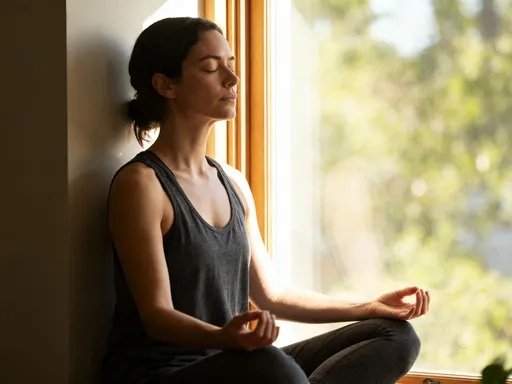
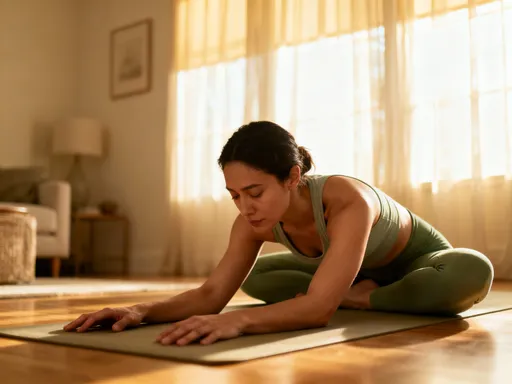
I practice every morning at the same time—usually just after I’ve made tea and before the household wakes up. This consistency helps anchor the habit. My space is a quiet corner of the living room, with a small mat and a window that lets in morning light. I don’t need special clothes or equipment. Just being there, present, is enough.
My routine takes about 10 to 15 minutes and includes three main components: standing posture, gentle arm movements, and mindful breathing. I start with two minutes of zhan zhuang, focusing on alignment and breath. Then I move into “lifting the sky,” a simple sequence where I raise my hands overhead on the inhale and lower them in front on the exhale. I repeat this for five cycles, staying aware of the flow. Finally, I end with a minute of stillness, hands resting at my lower abdomen, simply observing.
What makes this routine sustainable is its simplicity. I don’t judge myself if my mind wanders. I don’t push through fatigue. If I’m feeling unwell, I might shorten it to five minutes or just stand quietly. The practice adapts to me, not the other way around. Over time, I’ve noticed real changes: my breathing is easier, my focus is sharper, and I experience fewer tension headaches. I’m not perfect—but I’m present. And that’s enough.
Conclusion: Wellness Isn’t Perfect Practice—It’s Wise Practice
Looking back, the mistakes I made weren’t failures—they were necessary lessons. They taught me that wellness isn’t about doing more, moving faster, or achieving dramatic results. It’s about practicing wisely, with awareness, humility, and respect for the body’s natural rhythms. Qigong isn’t a performance; it’s a conversation between mind and body, breath and movement, effort and ease.
What almost broke me wasn’t qigong itself, but my approach to it. I treated it like a task to master rather than a practice to live into. When I shifted from striving to being, everything changed. The benefits didn’t come from intensity, but from consistency, patience, and small, mindful choices.
For anyone considering qigong—or any wellness practice—start gently. Seek guidance when you can. Honor the basics. Let go of expectations. And remember, the goal isn’t perfection, but presence. Your body already knows how to heal, balance, and restore—it just needs space, time, and attention.
Finally, while qigong can support overall well-being, it is not a substitute for professional medical care. If you have health concerns, always consult a qualified healthcare provider. True wellness is a partnership between self-care and expert guidance. With both, you can build a practice that sustains you—not just for weeks, but for years to come.